Debunking AI myths: the PhD-level Intelligence claim
The Danger of Overestimating AI Capabilities

I help developers succeed in Artificial Intelligence and Web3; Former AWS Amplify Developer Advocate. I am very excited about the future of the Web and JavaScript. Always happy Computer Science Engineer and humble Google Developer Expert. I love sharing my knowledge by speaking, training and writing about cool technologies. I love running communities and meetups such as Web3 London, GraphQL London, GraphQL San Francisco, mentoring students and giving back to the community.
Have you ever read a headline claiming that AI has achieved "PhD-level intelligence" or can perform scientific research like a human? If so, you're not alone. The AI field is rife with bold claims and exciting breakthroughs. However, as we navigate this rapidly evolving landscape, it's crucial to approach such assertions with a critical eye and a deep understanding of AI's true capabilities and limitations.

This article explores the fascinating interplay between AI achievements, human interpretation, and the dangers of overstating AI intelligence. We'll delve into why these claims often fall short and why accurate representation of AI capabilities is vital for responsible development and deployment.
The Allure of AI Hype
It's easy to get caught up in the excitement surrounding AI advancements. The idea of machines achieving human-like intelligence is captivating, and the potential applications seem limitless. However, this enthusiasm can lead to a dangerous tendency: anthropomorphising AI.
Understanding AI's True Nature
To truly grasp AI's capabilities, we need to understand its fundamental nature:
Pattern Recognition, Not Understanding: AI systems, particularly large language models like ChatGPT, excel at recognising patterns and making statistical correlations. They don't possess genuine understanding or abstract reasoning abilities.
Narrow Intelligence: AI demonstrates impressive results in specific tasks but lacks the general intelligence and adaptability of humans.
No True Reasoning: Current AI operates on probabilistic associations, without the capacity for general reasoning or forming an internal model of the world.
Absence of Metacognition: Unlike humans, AI cannot reflect on its own thought processes, identify errors, or adjust its approach accordingly. Against popular belief, Chain-of-Thought techniques, in gpt-4 o1 models, don’t equal to human cognition, thought or metacognition.
The Pitfalls of Anthropomorphism
When we attribute human-like qualities to AI, we open ourselves up to misinterpretation and unrealistic expectations. This tendency to anthropomorphize AI can lead to several dangerous misconceptions:
Emotional Projections: We might interpret an AI's output as being "friendly" or "curt," when in reality, it's simply producing text based on statistical patterns.
Overestimation of Capabilities: Anthropomorphism can lead us to believe AI possesses human-like reasoning and decision-making skills it doesn't actually have.
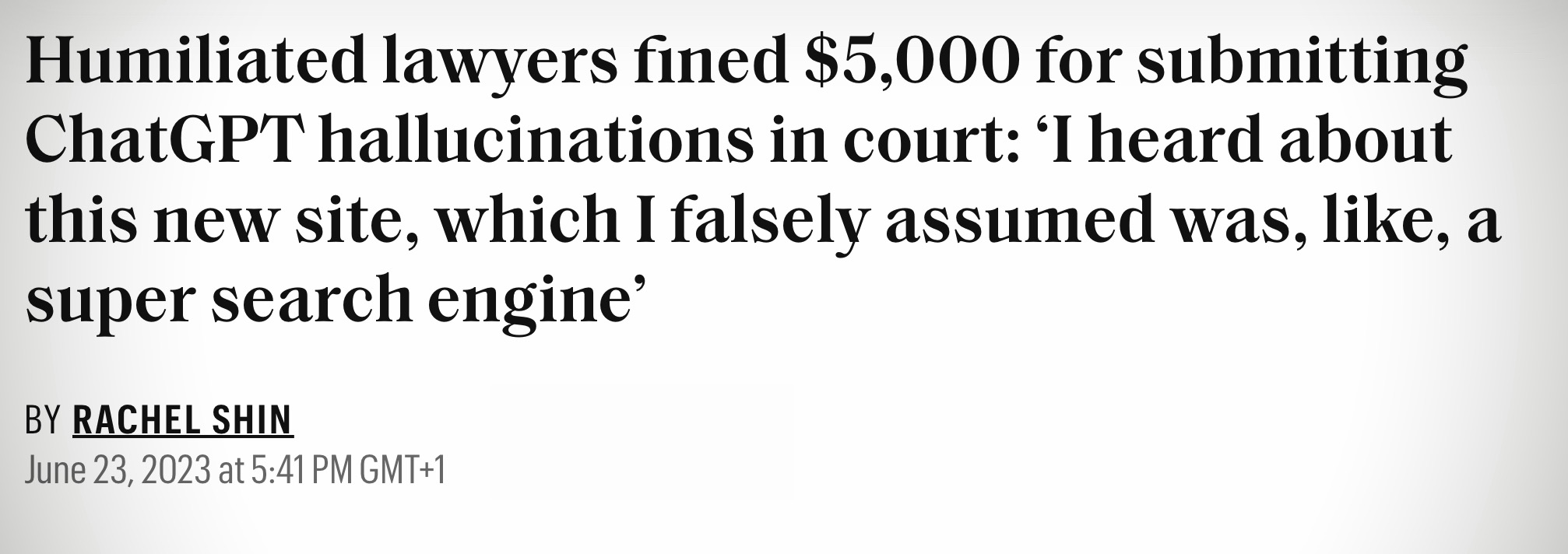
Misinterpreting AI as an Oracle: Many people mistakenly believe that AI has access to all human knowledge, treating it as an all-knowing authority. In reality, AI's knowledge is limited to its training data, which often comes from publicly available sources like Wikipedia, Reddit, and online forums.
Confusing Data Patterns for Opinions: When AI generates responses on topics like "the greatest basketball player of all time," it's not expressing a personal opinion or expert analysis. Instead, it's reflecting patterns in its training data, which may be biased or incomplete.
Attributing Common Sense: Humans often assume AI possesses basic common sense reasoning, but AI systems frequently struggle with intuitive understanding that we take for granted.
Assuming Lived Experience: Unlike humans, AI doesn't have personal experiences to draw from. It lacks the embodied understanding that comes from interacting with the physical world, forming relationships, or navigating social situations.
Presuming Tacit Knowledge: Humans possess a vast amount of unspoken, intuitive knowledge gained through experience. AI lacks this tacit knowledge, which is difficult to codify and often missing from training data.
By recognizing these pitfalls of anthropomorphism, we can better navigate the complex landscape of artificial intelligence, appreciating its capabilities while remaining aware of its fundamental differences from human intelligence.
The Limitations of Current AI Systems
Despite impressive achievements, AI faces significant hurdles that go beyond anthropomorphic misconceptions:
Lack of Logical Deduction: AI struggles with precise logical reasoning and multi-step problem-solving crucial for scientific research.
Vulnerability to Errors: Current systems are prone to hallucinations, logical fallacies, and a lack of robustness when faced with novel situations.
Absence of Scientific Method: AI cannot independently formulate hypotheses, design experiments, or draw evidence-based conclusions—core components of scientific inquiry.
Correlation vs. Causation: AI excels at identifying correlations in data but struggles to understand causation. This limitation can lead to misinterpretations of complex phenomena. For example, consider a traffic light:
Correlation: AI might observe that green lights and red lights frequently appear together at intersections.
Causation: However, only a causal understanding explains the correct sequence and purpose of green and red lights in controlling traffic flow.
AI's reliance on correlations means it may miss crucial causal relationships that humans intuitively grasp. This can lead to oversimplified or incorrect conclusions in complex domains like scientific research or policy-making.
- Data Biases: AI outputs can perpetuate biases present in their training data. For example, if certain viewpoints are overrepresented on platforms like Reddit or Twitter, these biases can manifest in AI responses across various domains.
These limitations underscore the importance of human oversight and critical evaluation of AI outputs, especially in high-stakes domains. Recognizing both the tendency to anthropomorphize AI and its inherent limitations is crucial for responsible development and deployment of AI technologies.
Why Accurate Representation Matters
Overstating AI capabilities isn't just an academic concern; it has real-world implications:
Safety Risks: Deploying AI in critical domains before it's truly ready could lead to dangerous errors in fields like healthcare or autonomous vehicles.
Ethical Concerns: Algorithmic biases can perpetuate and amplify societal inequities if AI is used prematurely in decision-making processes.
Resource Misallocation: Exaggerated claims can divert funding from other promising areas of research and development.
Erosion of Trust: False or misleading statements about AI capabilities can damage public trust, hindering responsible development and adoption.
Conclusion
While AI has made remarkable strides, claims of "PhD-level" intelligence or human-like research capabilities require careful scrutiny. By understanding AI's true nature—its strengths and limitations—we can foster a more realistic and productive approach to its development and deployment.
As we continue to push the boundaries of what's possible with AI, let's commit to:
Critical evaluation of AI claims and achievements
Demanding greater transparency from researchers and developers
Focusing on responsible development that maximizes benefits while mitigating risks
Only by maintaining a clear-eyed view of AI's current capabilities can we chart a course towards a future where artificial and human intelligence truly complement each other, unlocking unprecedented potential for innovation and progress.
What are your thoughts on the current state of AI and how it's portrayed in the media? Share your perspectives in the comments below!


